

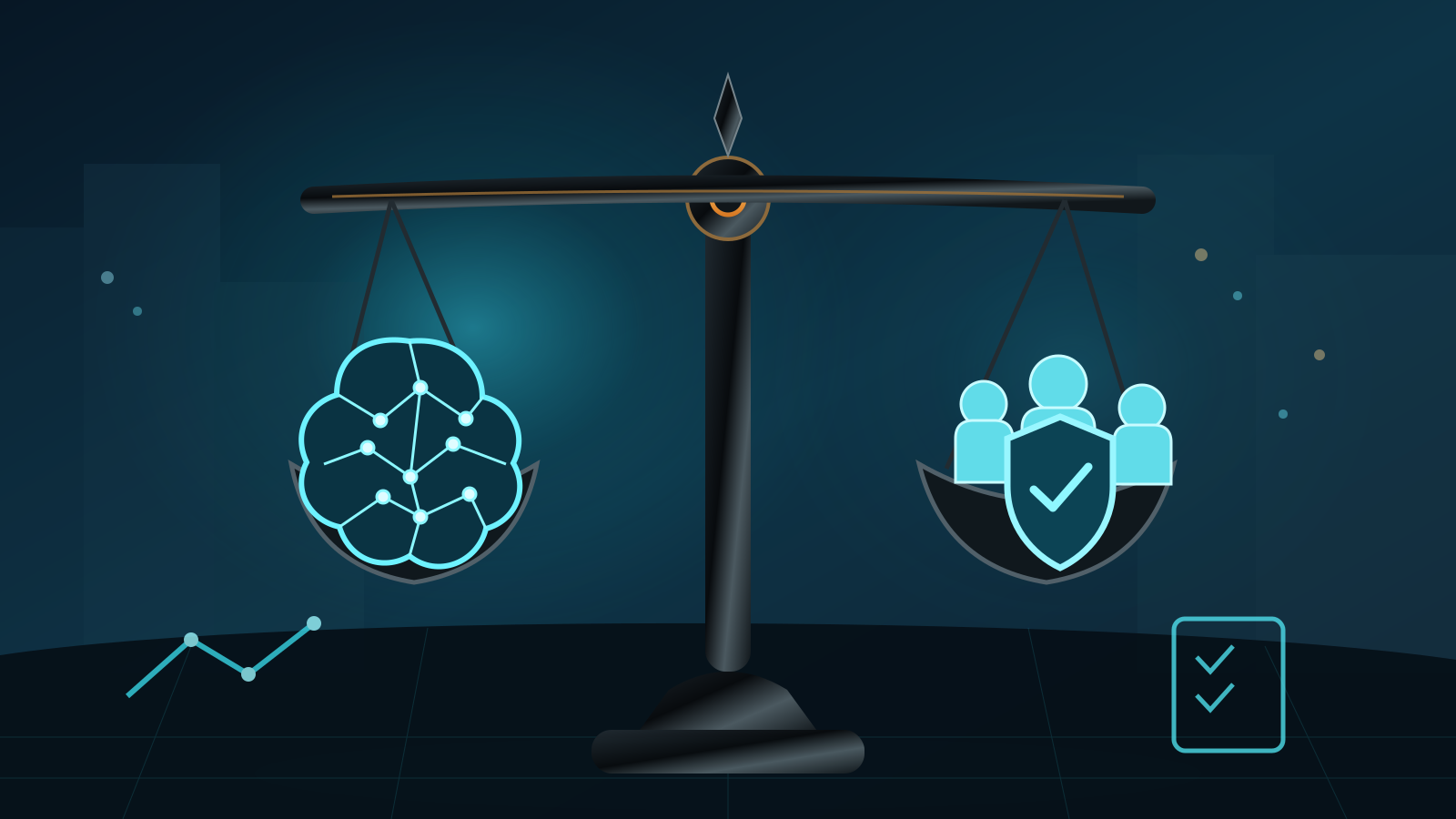


Artificial intelligence is already part of the workplace. Employees use it to write emails, summarize documents, analyze information, generate ideas, and automate repetitive work. The question for most businesses is no longer whether AI will be used. It is whether the business knows how it is being used, what data is going into it, and who is responsible for the results.
That is where AI governance comes in.
What Is AI Governance?
AI governance is simply the set of rules, responsibilities, and controls a business puts around artificial intelligence.
It does not need to mean a large committee or a stack of complicated policies. For a small or midsize business, good governance can start with a few clear answers:
- Which AI tools are approved for business use?
- What information can employees put into those tools?
- Which AI-generated decisions require human review?
- Who owns the AI accounts and business data?
- How will the company review new tools as they appear?
Without those answers, employees will usually create their own. That is how Shadow AI develops: well-intentioned staff using unapproved AI tools because they are fast and convenient.
The Risk Is Usually the Data, Not the Robot
The biggest AI risk for most businesses is not a science-fiction scenario. It is an employee copying sensitive information into the wrong system.
That could include customer records, financial information, internal documents, passwords, contracts, employee data, or confidential business plans. Once information leaves a managed environment, the business may lose control over how it is stored, processed, retained, or shared.
AI governance gives employees a safe lane to work in instead of simply telling them, “Don’t use AI.”
Five Practical Guardrails
1. Approve the Tools
Create a short list of AI platforms that employees are allowed to use for business. Whenever possible, use business-managed accounts rather than personal accounts.
2. Define the Data Rules
Be specific about what cannot be entered into an AI system. Sensitive customer information, credentials, regulated data, and confidential company information should have clear handling rules.
3. Keep Humans Accountable
AI can assist with decisions, but it should not quietly become the final decision-maker for important business actions. Financial approvals, hiring decisions, legal matters, security actions, and customer-impacting decisions should have human review.
4. Control Access and Ownership
The company should know who has access to AI tools, who owns the accounts, and what happens when someone leaves. AI access should be treated like any other business application: managed, documented, and removable.
5. Review What Changes
AI tools change quickly. Features, privacy settings, integrations, and data-handling terms can all change over time. Governance should be reviewed regularly instead of being written once and forgotten.
Start Simple
A useful AI governance program can begin with four steps:
- Identify which AI tools employees are already using.
- Choose the tools the business is comfortable supporting.
- Publish a one-page acceptable-use policy covering data, review, and accountability.
- Train employees on the policy and revisit it as the technology changes.
The goal is not to slow down innovation. The goal is to make sure the business can adopt AI without giving up visibility, security, or accountability.
AI Governance Is Becoming Part of IT Governance
AI is rapidly becoming another layer of the technology environment, alongside email, cloud applications, endpoints, backups, and cybersecurity. Businesses that manage it the same way they manage other critical systems will be in a much better position to use AI productively without creating unnecessary risk.
For most organizations, the best AI policy is not “no AI.” It is approved AI, approved data, and clear human responsibility.
VaBeachTech helps businesses build practical AI and cybersecurity guardrails that match the way their teams actually work. If your employees are already using AI and you are not sure where your company data is going, now is the right time to put a governance plan in place.